
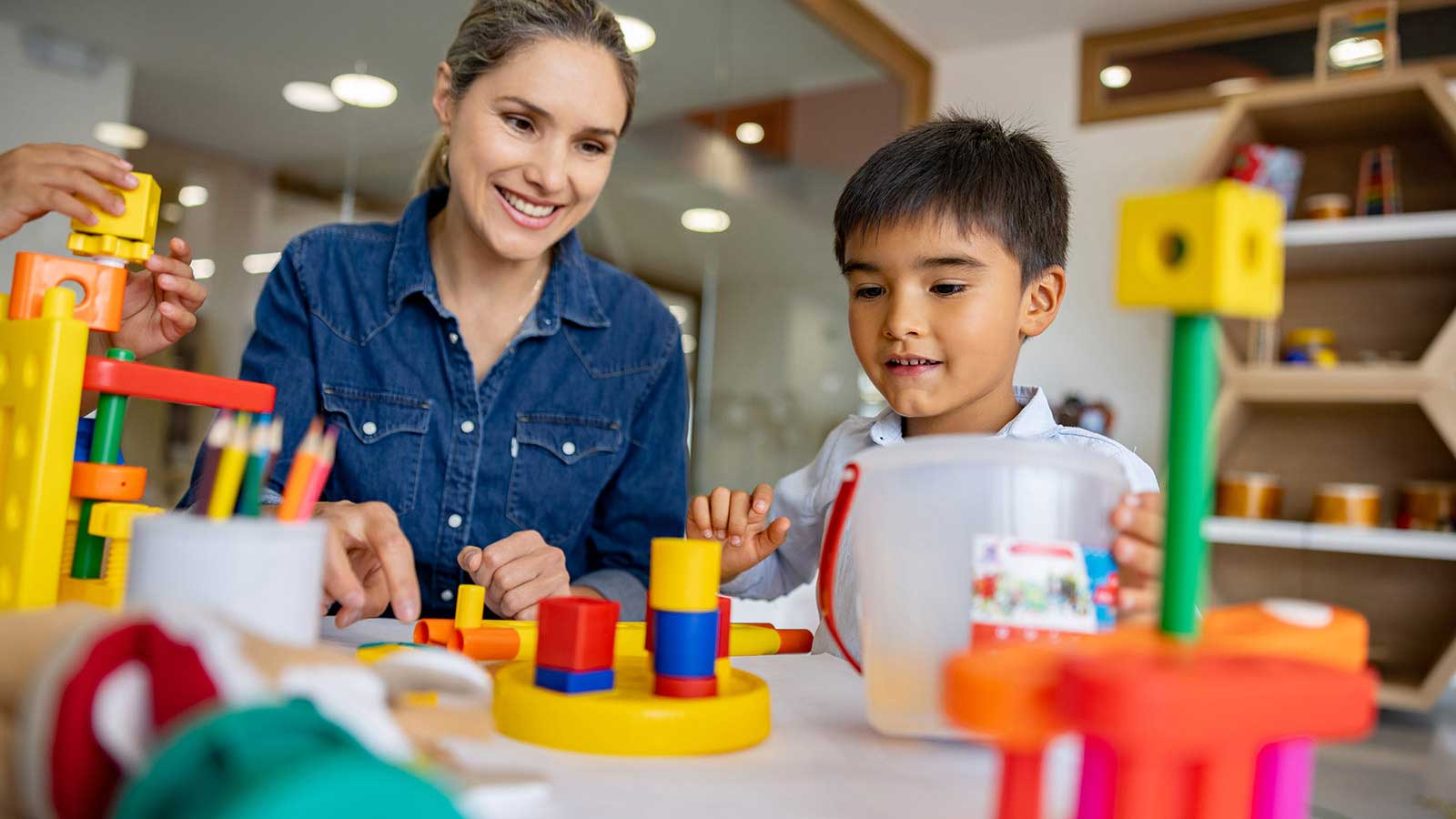
Expert paediatric occupational therapy at our Beta 2, Greater Noida centre — helping every child feel regulated, capable, and independent.
Trusted Paediatric Occupational Therapy in Beta 2
At Gyanti Child Development Center, we believe every child deserves the confidence that comes from doing things independently. Our occupational therapy centre in Beta 2, Greater Noida is a trusted destination for families seeking expert, compassionate care for sensory processing difficulties, fine motor delays, handwriting struggles, gross motor coordination, motor planning, and daily living skills. Our RCI-registered occupational therapists build individualised therapy plans that deliver real, measurable progress.
Conveniently located near AVJ Homes in Beta 2, our centre serves families across Greater Noida — Alpha, Beta 1, Gamma, Delta, and beyond. We combine evidence-based sensory integration and motor intervention with a warm, child-friendly environment so that therapy feels like play, not work.
From the very first assessment, we take time to understand your concerns, your child’s history, and your family’s goals. Every session is built around your child’s strengths, and every milestone is celebrated. Our team works closely with parents so that regulation strategies and motor skills continue to grow between appointments — because daily independence grows fastest when home and clinic work together.
Request an Occupational Therapy Assessment →What Is Paediatric Occupational Therapy?
Occupational therapy is a specialised intervention that helps children develop the skills they need for the “occupations” of childhood — playing, learning, dressing, eating, writing, and interacting with others. While speech and language therapy focus on communication, occupational therapy focuses on how a child’s body and brain work together to complete everyday tasks. At our occupational therapy centre in Beta 2, Greater Noida, therapy is tailored to each child’s developmental stage, strengths, and needs. Sessions are led by qualified occupational therapists who use play-based and sensory-rich methods to make learning engaging and effective.
Occupational therapy is not only about building motor skills. It is about giving a child the tools to sit and attend in class, hold a pencil comfortably, manage buttons and zips, tolerate different textures at mealtimes, stay calm in busy environments, and join in play with friends. For many children, occupational therapy also supports emotional regulation and confidence. Our holistic approach means we address the whole child — not just the symptom — and we collaborate with parents, teachers, and other therapists to ensure every child gets consistent support.
Whether your child needs help with sensory sensitivities, fine motor precision, balance, or self-care routines, our team is here to walk alongside your family every step of the way.
Signs Your Child May Need Occupational Therapy
Early identification is key. Consider an occupational therapy assessment if your child:
- Is overly sensitive to touch, sound, light, or movement
- Seeks excessive movement — spinning, crashing, jumping
- Has difficulty with fine motor tasks like buttoning, cutting, or threading
- Holds a pencil awkwardly or has messy, slow handwriting
- Appears clumsy, trips often, or has poor balance
- Struggles to sit still, concentrate, or follow routines
- Has feeding difficulties or is a very fussy eater
- Needs extra help with dressing, grooming, or toileting
If you notice any of these signs, don’t wait. Early intervention can make a significant difference. Contact Gyanti Child Development Center for a comprehensive occupational therapy evaluation.
Parents often ask, “Will my child just grow out of it?” Some difficulties do ease with maturity, but it is not always possible to know in advance. A professional assessment is the safest way to rule out underlying sensory or motor issues and to give your child the best possible start. The earlier a concern is addressed, the sooner therapy can begin — and early occupational therapy consistently produces better long-term outcomes.
Conditions We Treat at Our Occupational Therapy Centre in Beta 2
Our occupational therapists have extensive experience treating a wide range of sensory, motor, and functional difficulties in children. Each condition is assessed individually and treated with a plan tailored to your child’s age, abilities, and family priorities.
- Sensory processing disorder
- Sensory modulation difficulties
- Developmental coordination disorder (DCD)
- Fine motor delay
- Gross motor delay
- Autism spectrum disorder
- ADHD and attention difficulties
- Handwriting difficulties
- Motor planning and praxis difficulties
- Visual motor and visual perceptual difficulties
- Feeding and oral motor difficulties
- Activities of daily living (ADL) delays
- Cerebral palsy support
- Down syndrome motor support
- Postural control and core strength difficulties
If your child has a diagnosis that is not listed here, please contact us — we regularly support children with complex and overlapping needs, and can advise whether occupational therapy is appropriate.
Occupational Therapy for Autism in Greater Noida
Children on the autism spectrum often experience sensory processing differences, motor planning challenges, and difficulty with daily routines. Our occupational therapy for autism focuses on sensory regulation, attention, fine and gross motor skills, play, and independence in self-care, while reducing frustration. We use sensory integration techniques, visual supports, structured routines, and movement-based activities to help children feel calm, organised, and ready to learn. Our centre in Beta 2 is equipped to support sensory needs and create a predictable environment for autistic learners.
Therapy for autistic children may include building body awareness, improving postural control, teaching dressing and feeding routines, expanding play skills, and supporting transitions between activities. We work closely with speech-language pathologists and special educators at our centre so that regulation and independence goals are reinforced in every setting. Parents receive practical strategies they can use during meals, bath time, play, and community outings — helping generalisation happen faster.
Sensory Integration Therapy
Sensory integration is the brain’s ability to organise and interpret information from the senses — touch, movement, body position, sound, sight, and smell. Children with sensory processing difficulties may over-react, under-react, or seek out sensory input in ways that interfere with daily life. Our sensory integration therapy uses controlled, playful sensory experiences — swings, obstacle courses, textured materials, deep pressure, and movement — to help the brain process sensory information more effectively.
In therapy, we use motivating toys, swings, climbing frames, and routines to build regulation and body awareness. Sessions are structured but playful, so children stay engaged. Progress is tracked with clear data, and parents receive regular feedback on what is working and what sensory strategies to use at home. Over time, children become calmer, more organised, and better able to participate in school and family life.
Fine Motor Skills & Handwriting Therapy
Fine motor skills are the small, precise movements of the hands and fingers needed for writing, cutting, buttoning, threading, and using utensils. Children with fine motor difficulties may avoid pencil tasks, produce messy work, or tire quickly. Our therapists break fine motor skills down into manageable steps — building hand strength, in-hand manipulation, pincer grasp, and bilateral coordination before moving on to functional tasks.
Handwriting therapy addresses pencil grip, letter formation, sizing, spacing, alignment, and writing speed. We use multi-sensory approaches and adaptive tools where needed. Parents are given simple practice activities to reinforce new skills at home, so children use them naturally outside the therapy room.
Gross Motor Skills & Motor Planning Therapy
Gross motor skills involve the large muscles of the body — running, jumping, climbing, balancing, and throwing. Motor planning (praxis) is the ability to figure out and carry out a new movement. Children with gross motor or motor planning difficulties may appear clumsy, avoid physical play, or struggle to learn new motor tasks. Our therapists design graded movement activities that build core strength, balance, coordination, and confidence.
Children with gross motor difficulties may avoid playgrounds, tire easily, or struggle with sports. Our therapists identify the specific area of need and build skills step by step — using obstacle courses, ball games, and playground-style activities so learning feels natural and fun.
Activities of Daily Living (ADL) Training
Activities of daily living are the everyday self-care tasks that build independence — dressing, grooming, brushing teeth, toileting, feeding, and managing personal belongings. Some children need extra support to master these routines because of motor, sensory, or planning difficulties. Our occupational therapists use task analysis, visual schedules, and backward chaining to teach each step clearly and celebrate progress.
We teach children strategies to sequence routines, manage fastenings, and tolerate grooming sensations, so they can complete daily tasks with growing independence. Parents receive simple daily activities — practising zips, setting the table, packing a bag — to reinforce new skills at home.
Feeding Therapy & Oral Motor Skills
Feeding difficulties can stem from sensory sensitivities, oral motor weakness, or difficulty coordinating chewing and swallowing. Children may limit their diet to a few textures, gag easily, or avoid mealtimes altogether. Our occupational therapists assess the underlying cause and build a gentle, step-by-step feeding plan that respects the child’s comfort while expanding their food repertoire.
Carryover is the most important part of feeding therapy. We move from structured tasting to relaxed family meals, and parents are given simple practice strategies to reinforce new foods and oral skills at home so children eat more confidently outside the therapy room.
Visual Motor & Visual Perceptual Skills Therapy
Visual motor integration is the ability to coordinate what the eyes see with what the hands do — essential for copying from the board, completing puzzles, catching a ball, and writing within lines. Visual perception involves recognising shapes, spatial relationships, and figure-ground discrimination. Children with difficulties here may reverse letters, lose their place when reading, or struggle with jigsaw puzzles.
Many visual perceptual difficulties look like carelessness in the classroom. Our therapists use puzzles, mazes, construction toys, and copying tasks to build these skills gradually, and they coach parents and teachers on reasonable accommodations that reduce frustration.
Self-Regulation & Attention Therapy
Self-regulation is the ability to manage energy levels, emotions, and attention in different situations. Some children are constantly on the move, others shut down in busy environments, and many struggle to sit still and focus. Our therapists use movement breaks, deep-pressure input, breathing routines, visual timers, and sensory strategies to help children find their “just right” level of alertness.
Self-regulation skills are vital for classroom participation, friendships, and self-confidence. We work closely with parents and schools so that the same sensory and regulation strategies are used across environments.
Early Intervention Occupational Therapy
The first three years of life are critical for brain development. Our early intervention programme focuses on infants and toddlers who are at risk for sensory or motor delays. Therapy is play-based, family-centred, and integrated into daily routines so that learning happens naturally.
In early intervention, parents are the most important therapists. We coach families on how to turn everyday moments — feeding, bathing, playing — into rich sensory and motor-learning opportunities. This approach is gentle, effective, and respectful of the parent-child bond.
Our Occupational Therapy Assessment Process
Every child begins with a comprehensive assessment that includes parent interview, standardised testing, observation, and informal play-based measures. We evaluate sensory processing, fine motor skills, gross motor coordination, motor planning, visual motor integration, self-regulation, and activities of daily living. Following assessment, we provide a detailed report and a personalised therapy plan with clear goals.
Assessment is not a one-time event. We re-evaluate progress every 8–12 weeks and adjust goals as your child grows. Parents receive written summaries and opportunities to discuss findings with the therapist, so you always understand what we are working on and why.
Individualised Occupational Therapy Plans
No two children are alike. Our therapists design therapy plans around each child’s unique strengths, challenges, and family priorities. Goals are functional, measurable, and reviewed every 8–12 weeks to ensure meaningful progress.
We believe therapy should fit the child — not the other way around. If a child seeks movement, we use movement. If a child is calmed by deep pressure or music, we build those in. This flexibility keeps children engaged and makes therapy more effective.
Evidence-Based Occupational Therapy Approaches We Use
- Ayres Sensory Integration®
- Play-based occupational therapy
- DIR/Floortime
- Handwriting Without Tears® strategies
- Task analysis and backward chaining
- Visual supports and visual schedules
- Social stories
- Parent coaching
Our therapists choose approaches based on the child’s needs and the latest research. We do not follow a one-size-fits-all method — we combine techniques thoughtfully and review what works at every stage.
The Role of Parents in Occupational Therapy
Parents are partners in therapy. We provide coaching, home practice activities, and regular updates so that strategies are reinforced throughout the week. Children make faster progress when families are actively involved.
You do not need to be a therapist to help your child. Small changes — offering movement breaks, using visual schedules, allowing extra time for dressing, and praising effort — make a big difference. We show you exactly how to do this in a way that feels natural and stress-free.
Simple Home Practice Ideas for Sensory & Motor Growth
- Build a daily movement routine — climbing, swinging, or jumping.
- Practise fastenings and dressing during calm, unhurried moments.
- Play with playdough, tongs, and threading to build hand strength.
- Use a visual schedule for morning and bedtime routines.
- Offer deep-pressure hugs or a weighted lap pad when your child is dysregulated.
Consistency matters more than duration. Five minutes of focused practice every day is often more effective than an hour once a week. We help families build realistic routines that fit into busy lives.
Why Choose Our Occupational Therapy Centre in Beta 2, Greater Noida?
- RCI-registered occupational therapists with paediatric expertise.
- Multidisciplinary team — occupational therapy, speech therapy, language therapy, special education, psychology under one roof.
- Convenient Beta 2 location near AVJ Homes, easily accessible from all Greater Noida sectors.
- Personalised, play-based sessions that children enjoy.
- Regular progress reviews and transparent communication with parents.
- Trusted by families across Greater Noida with a 4.8-star rating.
Choosing the right therapy centre is one of the most important decisions a parent can make. We invite you to visit our centre, meet our team, and ask questions before committing to therapy. We want you to feel confident that your child is in caring, capable hands.
Meet Our Occupational Therapists
Our team includes certified occupational therapists, speech-language pathologists, special educators, and psychologists who collaborate to provide holistic care. Each therapist brings years of experience working with children with diverse sensory, motor, and developmental needs.
Because our specialists share a single centre, your child’s entire care team can communicate easily. This means sensory and regulation strategies are reinforced in speech therapy sessions, and special educators can use the same visual supports and movement breaks. This joined-up approach reduces confusion for the child and speeds up progress.
Child-Friendly Facilities at Our Beta 2 Centre
Our centre is designed to be safe, calming, and engaging. Therapy rooms are equipped with swings, climbing equipment, balance beams, sensory bins, tactile materials, visual schedules, and play-based resources. We maintain a clean, welcoming environment where children feel comfortable and motivated.
We know that many children learn best when they feel relaxed. Our rooms are arranged to reduce distractions, and we keep a consistent routine from session to session so children know what to expect. For children with sensory sensitivities, we can adjust lighting, sound, and seating as needed.
Success Stories from Families We Serve
“My son used to melt down every time we left the house and refused to wear anything with tags. After six months of occupational therapy at Gyanti, he dresses himself and stays calm in busy places. The therapists are patient, skilled, and genuinely care.” — Parent, Beta 2. Many families across Greater Noida have seen their children gain confidence and independence through our tailored programmes.
Every child’s journey is different, but the common thread is progress that parents can see and celebrate. From first successful zips to confident playground play, from meltdowns to self-regulation — these are the moments that drive our team every day.
What Parents Say About Us
Our centre has earned a 4.8-star rating from 127+ families. Parents appreciate our transparency, the progress their children make, and the warmth of our team.
We are grateful for the trust families place in us. Every review and referral is a reminder of the responsibility we carry — and a motivation to keep improving.
Frequently Asked Questions About Occupational Therapy in Beta 2
Below are the questions parents ask us most often. If your question is not answered here, please call or WhatsApp us — we are happy to help.
Location & Directions
Address: J-367, Block J, Beta 2, Greater Noida, 201310, near AVJ Homes, Uttar Pradesh.
We are easily reachable from Alpha, Beta 1, Gamma, Delta, and other sectors. Parking is available nearby.
If you are travelling by metro, the nearest stations are Pari Chowk and Alpha 1, from where you can take an auto or cab. For families coming from Noida Extension or Greater Noida West, the route via the Noida–Greater Noida Expressway is quick and convenient.
Opening Hours
Monday to Saturday: 9:00 AM – 7:00 PM. Sunday: Closed. Appointments are recommended to avoid waiting.
We understand that families have busy schedules. If you need an early morning or late evening slot, please ask — we do our best to accommodate working parents and school-going children.
Prime Locations We Serve Across Greater Noida
Our Beta 2 centre is easily accessible from every major locality in Greater Noida and Greater Noida West. Families travel to us for occupational therapy from across the region — and we are proud to serve them all.
Alpha & Beta Sectors
- Alpha 1
- Alpha 2
- Beta 1
- Beta 2
- Beta 3
Gamma, Delta & Zeta
- Gamma 1 & 2
- Delta 1, 2 & 3
- Zeta 1 & 2
- Eta 1 & 2
- Pari Chowk
Omicron, Omega & Mu
- Omicron 1, 2 & 3
- Omega 1 & 2
- Mu 1 & 2
- Nu 1 & 2
- Xi 1 & 2
Knowledge Park & Techzone
- Knowledge Park I–V
- Techzone 1–4
- Ansal Golf Link
- Jaypee Greens
- Chi 1–5
Phi, Psi & More
- Phi 1–4
- Psi 1–5
- Sector 1–10
- Surajpur
- Kasna
Greater Noida West
- Noida Extension
- Gaur City 1 & 2
- Cherry County
- Ace City
- Supertech Eco Village
Nearby Areas
- Jagat Farm
- Bhangel
- Dadri Road
- Rasoolpur
- Haldoni
Also Serving
- Noida (via Expressway)
- Ghaziabad (NH-24)
- Greater Noida Expressway
- Dankaur
- Jewar (upcoming airport belt)
Can’t find your locality listed? Call us at +91 9128805585 and we will help you plan your visit. For families who cannot travel, we also offer online occupational therapy consultations.
Book an Occupational Therapy Appointment
Call +91 9128805585 or WhatsApp us to schedule an assessment. You can also email gyantichilddevelopmentcenter@gmail.com.
When you call, we will ask a few questions about your child’s history and your concerns. This helps us match your child with the right therapist and prepare for the first visit. There is no obligation — we are here to answer your questions.
Book an Appointment →Related Services at Gyanti
- Speech Therapy — for articulation, clarity, fluency, and voice.
- Language Therapy — for vocabulary, comprehension, grammar, and social language.
- Special Education — individualised learning support for children with developmental differences.
- ABA Therapy — behaviour-analytic support for meaningful skill-building.
- Early Intervention — for infants and toddlers at risk of developmental delay.
- Psychological Assessment — for cognitive, behavioural, and developmental evaluation.
Many children benefit from more than one therapy. Our team coordinates across disciplines so that your child’s plan is unified and consistent.
Helpful Resources for Parents
Explore our blog for articles on sensory processing, fine motor milestones, handwriting development, autism regulation strategies, and home practice tips.
Reading about sensory and motor development helps parents notice concerns earlier and act sooner. Our articles are written in plain language and based on current clinical guidance.
Read Our Blog →Insurance & Payment Options
We accept multiple payment methods and can guide you on insurance reimbursement. Please contact our front desk for details.
Our team can provide itemised invoices and therapy reports to support claims. If you have questions about documentation, just ask — we are happy to help.
Online Occupational Therapy Consultation (Telehealth)
Can’t visit our Beta 2 centre? We offer secure online occupational therapy consultations for families across Greater Noida and beyond. Contact us to learn more.
Telehealth works well for parent coaching, home programme reviews, sensory strategy planning, and follow-up sessions. A parent or caregiver should be present to help with technology and to participate in practice activities.
Referrals, Community Outreach & Screening Camps
We welcome referrals from paediatricians, schools, and other professionals. Please call us to discuss a child’s needs and schedule an assessment. For schools, we can also provide brief in-service training on sensory-friendly classrooms and motor-support strategies.
Gyanti also conducts free developmental screening camps in Greater Noida societies and schools. Contact us to organise a camp in your community. Screening camps help identify children who may need support but whose families have not yet sought help — and early identification is one of the most powerful tools we have.
Help Your Child Feel Calm, Capable, and Independent
Book an occupational therapy assessment at Gyanti Child Development Center, Beta 2, Greater Noida. Our team is ready to support your child’s sensory, motor, and daily-living journey.
Book Your Appointment Today →