
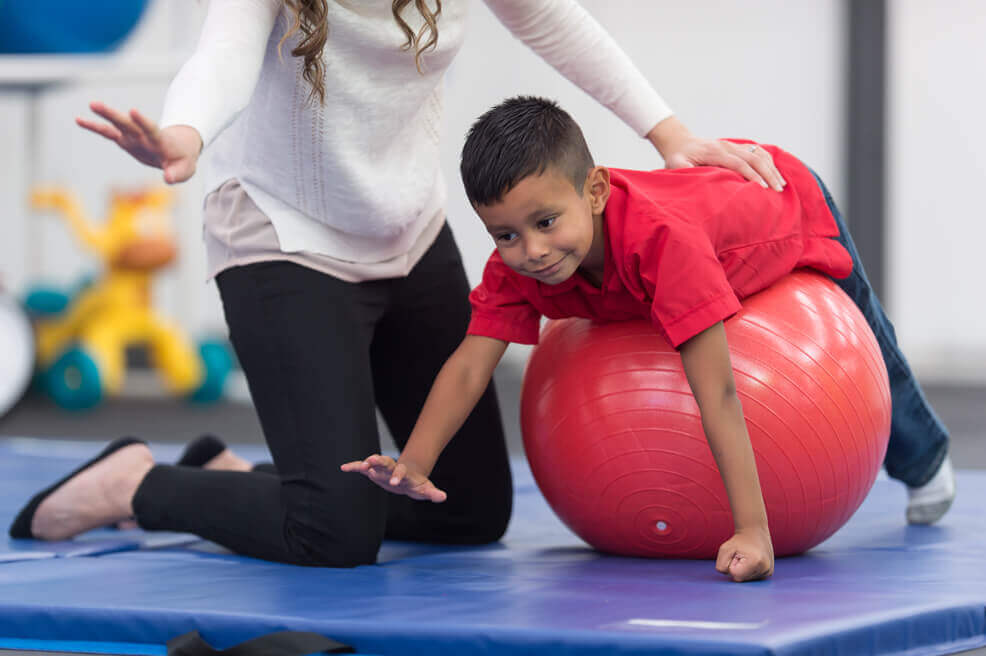
Expert paediatric physiotherapy at our Beta 2, Greater Noida centre — helping every child move with strength, balance, and confidence.
Trusted Paediatric Physiotherapy in Beta 2
At Gyanti Child Development Center, we believe every child deserves to move freely, play confidently, and keep up with their friends. Our physiotherapy centre in Beta 2, Greater Noida is a trusted destination for families seeking expert, compassionate care for gross motor delay, cerebral palsy, gait and walking difficulties, muscle weakness, balance problems, postural issues, and joint mobility restrictions. Our RCI-registered paediatric physiotherapists build individualised therapy plans that deliver real, measurable progress.
Conveniently located near AVJ Homes in Beta 2, our centre serves families across Greater Noida — Alpha, Beta 1, Gamma, Delta, and beyond. We combine evidence-based neurodevelopmental and movement-science approaches with a warm, child-friendly environment so that therapy feels like play, not work.
From the very first assessment, we take time to understand your concerns, your child’s history, and your family’s goals. Every session is built around your child’s strengths, and every milestone is celebrated. Our team works closely with parents so that strengthening and movement practice continue between appointments — because motor skills grow fastest when home and clinic work together.
Request a Physiotherapy Assessment →What Is Paediatric Physiotherapy?
Paediatric physiotherapy is a specialised intervention that helps children develop, restore, and improve movement. While occupational therapy focuses on daily living and sensory-motor function, physiotherapy focuses on the large-scale mechanics of the body — gross motor milestones, muscle strength, joint range of motion, posture, balance, coordination, and gait. At our physiotherapy centre in Beta 2, Greater Noida, therapy is tailored to each child’s developmental stage, strengths, and needs. Sessions are led by qualified paediatric physiotherapists who use play-based and movement-rich methods to make learning engaging and effective.
Physiotherapy is not only about building strength. It is about giving a child the ability to roll, sit, crawl, stand, walk, run, climb stairs, and join in playground games with confidence. It helps children with neurological conditions such as cerebral palsy maintain and improve functional movement, and it supports children with orthopaedic conditions such as flat feet, toe walking, or postural asymmetry. Our holistic approach means we address the whole child — not just the symptom — and we collaborate with parents, teachers, orthotists, and other therapists to ensure every child gets consistent support.
Whether your child needs help with a delayed milestone, a stiff joint, weak muscles, or an unusual walking pattern, our team is here to walk alongside your family every step of the way.
Signs Your Child May Need Physiotherapy
Early identification is key. Consider a physiotherapy assessment if your child:
- Does not roll, sit, crawl, or walk at the expected age
- Appears stiff or unusually floppy in the limbs or trunk
- Falls frequently or has poor balance
- Walks on tiptoes or has an unusual walking pattern
- Favours one side of the body or holds one arm/leg stiffly
- Has flat feet, in-toeing, or out-toeing
- Tires quickly during physical play or complains of leg pain
- Has an asymmetrical head or neck posture (torticollis)
If you notice any of these signs, don’t wait. Early intervention can make a significant difference. Contact Gyanti Child Development Center for a comprehensive physiotherapy evaluation.
Parents often ask, “Will my child just grow out of it?” Some difficulties do ease with maturity, but it is not always possible to know in advance. A professional assessment is the safest way to rule out underlying neurological, muscular, or orthopaedic issues and to give your child the best possible start. The earlier a concern is addressed, the sooner therapy can begin — and early physiotherapy consistently produces better long-term outcomes.
Conditions We Treat at Our Physiotherapy Centre in Beta 2
Our paediatric physiotherapists have extensive experience treating a wide range of movement, strength, and mobility difficulties in children. Each condition is assessed individually and treated with a plan tailored to your child’s age, abilities, and family priorities.
- Cerebral palsy
- Gross motor delay
- Developmental coordination disorder (DCD)
- Hypotonia (low muscle tone)
- Muscular dystrophy
- Torticollis (wry neck)
- Flat feet, in-toeing, out-toeing
- Toe walking
- Scoliosis and postural asymmetry
- Spina bifida and neural tube defects
- Post-fracture and post-surgical rehabilitation
- Joint hypermobility and range-of-motion restriction
- Balance and coordination difficulties
- Gait abnormalities
- Down syndrome motor support
If your child has a diagnosis that is not listed here, please contact us — we regularly support children with complex and overlapping needs, and can advise whether physiotherapy is appropriate.
Physiotherapy for Cerebral Palsy in Greater Noida
Children with cerebral palsy often experience difficulties with muscle tone, posture, movement control, and joint mobility. Our cerebral palsy physiotherapy focuses on maintaining and improving functional movement, preventing contractures, building strength, and supporting independence in daily activities. We use neurodevelopmental treatment (NDT/Bobath), task-specific training, stretching, positioning, and where appropriate orthotic support to help children reach their potential. Our centre in Beta 2 is equipped to support children with a wide range of motor abilities.
Therapy for children with cerebral palsy may include improving head and trunk control, teaching transitions such as sitting to standing, practising walking with or without aids, and building endurance for daily activities. We work closely with occupational therapists, speech-language pathologists, and special educators at our centre so that movement goals are reinforced in every setting. Parents receive practical handling and positioning strategies they can use during play, feeding, and transfers — helping generalisation happen faster.
Gross Motor Delay & Developmental Coordination Therapy
Gross motor skills involve the large muscles of the body — rolling, sitting, crawling, standing, walking, running, jumping, and climbing. A child with gross motor delay may reach these milestones later than expected, while a child with developmental coordination disorder (DCD) may hit milestones on time but struggle with coordination and motor planning. Our physiotherapists break each skill into achievable steps — building head and trunk control, core strength, and weight-bearing before moving on to more complex patterns.
In therapy, we use motivating toys, mats, therapy balls, and obstacle courses to elicit movement. Sessions are structured but playful, so children stay engaged. Progress is tracked with clear data, and parents receive regular feedback on what is working and what to practise at home. When a child is ready, we help them progress from floor mobility to upright play and finally to confident running, jumping, and sports participation.
Gait Training & Walking Difficulties
Walking is one of the most important functional goals for many families. Children may have difficulty with walking because of muscle weakness, joint stiffness, tone differences, balance deficits, or orthopaedic concerns. Our gait training programme assesses the entire walking cycle — heel strike, stance, swing, and push-off — and addresses the underlying causes rather than just the visible pattern.
We use parallel bars, gait trainers, treadmills, balance equipment, and functional practice to build a safer, more efficient walk. Where appropriate, we work alongside orthotists to recommend ankle-foot orthoses or shoe inserts. Parents are coached on how to practise walking at home and in the community so that progress carries over into everyday life.
Balance, Coordination & Postural Control
Balance and postural control are the foundation of all movement. Children who struggle with these skills may appear clumsy, fall frequently, avoid playground equipment, or sit with poor posture. Our physiotherapists use wobble boards, balance beams, therapy balls, and graded movement challenges to build core stability, trunk control, and dynamic balance.
Good posture and balance also support attention and classroom learning. We work closely with parents and schools so that the same postural and movement strategies are used across environments, and we advise on seating, desks, and classroom positioning where needed.
Muscle Weakness, Hypotonia & Strengthening Therapy
Muscle weakness and hypotonia (low muscle tone) affect a child’s ability to hold posture, move efficiently, and keep up with peers. Some children are diagnosed with a specific condition such as muscular dystrophy; others simply present with global weakness and fatigue. Our physiotherapists assess muscle strength, endurance, and recruitment patterns, then design progressive strengthening programmes that are safe and age-appropriate.
Strengthening in children rarely looks like a gym session. We use climbing, animal walks, resistance play, cycling, swimming-style movement, and functional tasks to build strength naturally. Parents are given simple daily activities — carrying groceries, pushing a stroller, climbing stairs — to reinforce strength gains at home.
Joint Mobility & Range of Motion Therapy
Restricted joint mobility can limit a child’s ability to move freely, particularly after surgery, injury, or in conditions such as cerebral palsy or muscular dystrophy. Our physiotherapists use gentle passive stretching, active-assisted movement, positioning, and splinting advice to maintain and improve range of motion and prevent contractures.
Carryover is the most important part of mobility therapy. We move from clinic-based stretching to home routines, and parents are given simple practice strategies so that joints stay mobile between sessions. Where needed, we coordinate with orthopaedic surgeons and orthotists to support post-surgical or bracing plans.
Toe Walking, Flat Feet & Orthopaedic Conditions
Lower-limb and foot alignment issues are common reasons for physiotherapy referral in childhood. Persistent toe walking, flat feet, in-toeing, and out-toeing can affect balance, walking efficiency, and comfort. Our physiotherapists assess the whole lower limb — hips, knees, ankles, and feet — to identify the cause and design targeted intervention.
Many lower-limb difficulties look like “clumsiness” or “a phase” but benefit from early physiotherapy. Our therapists use stretching, strengthening, balance work, and functional gait practice, and where appropriate recommend orthotics or footwear. Parents are coached on home stretches and activity ideas that support progress between sessions.
Neurodevelopmental Therapy (NDT / Bobath)
Neurodevelopmental treatment is a hands-on approach used with children who have movement and postural control difficulties resulting from neurological conditions such as cerebral palsy. It focuses on facilitating more typical movement patterns, improving alignment and postural tone, and helping the child experience and practise functional movements.
NDT is not a set of exercises — it is a way of handling and guiding the child so that their body learns more efficient patterns. Our physiotherapists are trained in neurodevelopmental techniques and integrate them into play-based sessions so that children experience success and stay motivated.
Early Intervention Physiotherapy
The first three years of life are critical for brain and motor development. Our early intervention programme focuses on infants and toddlers who are at risk for motor delays — including premature babies, babies with low tone, and those with known neurological conditions. Therapy is play-based, family-centred, and integrated into daily routines so that learning happens naturally.
In early intervention, parents are the most important therapists. We coach families on how to turn everyday moments — tummy time, bathing, feeding, playing — into rich movement-learning opportunities. This approach is gentle, effective, and respectful of the parent-child bond.
Our Physiotherapy Assessment Process
Every child begins with a comprehensive assessment that includes parent interview, developmental history, standardised motor testing, observation, and informal play-based measures. We evaluate gross motor milestones, muscle tone and strength, joint range of motion, posture, balance, coordination, and gait. Following assessment, we provide a detailed report and a personalised therapy plan with clear goals.
Assessment is not a one-time event. We re-evaluate progress every 8–12 weeks and adjust goals as your child grows. Parents receive written summaries and opportunities to discuss findings with the physiotherapist, so you always understand what we are working on and why.
Individualised Physiotherapy Plans
No two children are alike. Our physiotherapists design therapy plans around each child’s unique strengths, challenges, and family priorities. Goals are functional, measurable, and reviewed every 8–12 weeks to ensure meaningful progress.
We believe therapy should fit the child — not the other way around. If a child is motivated by balls, we use balls. If a child loves music, we build movement into musical play. This flexibility keeps children engaged and makes therapy more effective.
Evidence-Based Physiotherapy Approaches We Use
- Neurodevelopmental Treatment (NDT / Bobath)
- Task-specific motor training
- Proprioceptive Neuromuscular Facilitation (PNF)
- Constraint-Induced Movement Therapy (CIMT)
- Gait training with assistive devices
- Strength and conditioning programmes
- Balance and coordination training
- Parent coaching and home programmes
Our physiotherapists choose approaches based on the child’s needs and the latest research. We do not follow a one-size-fits-all method — we combine techniques thoughtfully and review what works at every stage.
The Role of Parents in Physiotherapy
Parents are partners in therapy. We provide coaching, home practice activities, and regular updates so that strategies are reinforced throughout the week. Children make faster progress when families are actively involved.
You do not need to be a therapist to help your child. Small changes — encouraging floor play, allowing extra time for walking practice, and praising effort rather than perfect technique — make a big difference. We show you exactly how to do this in a way that feels natural and stress-free.
Simple Home Practice Ideas for Strength & Movement
- Set aside daily floor time — tummy time, rolling, and crawling games.
- Use stairs, ramps, and low obstacles to practise stepping and balance.
- Encourage barefoot play on safe surfaces to build foot strength.
- Stretch tight muscles gently during bath or bedtime routines.
- Practise sit-to-stand and squatting during everyday activities.
Consistency matters more than duration. Five minutes of focused practice every day is often more effective than an hour once a week. We help families build realistic routines that fit into busy lives.
Why Choose Our Physiotherapy Centre in Beta 2, Greater Noida?
- RCI-registered paediatric physiotherapists with specialist expertise.
- Multidisciplinary team — physiotherapy, occupational therapy, speech therapy, language therapy, special education, psychology under one roof.
- Convenient Beta 2 location near AVJ Homes, easily accessible from all Greater Noida sectors.
- Personalised, play-based sessions that children enjoy.
- Regular progress reviews and transparent communication with parents.
- Trusted by families across Greater Noida with a 4.8-star rating.
Choosing the right therapy centre is one of the most important decisions a parent can make. We invite you to visit our centre, meet our team, and ask questions before committing to therapy. We want you to feel confident that your child is in caring, capable hands.
Meet Our Paediatric Physiotherapists
Our team includes certified paediatric physiotherapists, occupational therapists, speech-language pathologists, special educators, and psychologists who collaborate to provide holistic care. Each therapist brings years of experience working with children with diverse movement, neurological, and developmental needs.
Because our specialists share a single centre, your child’s entire care team can communicate easily. This means movement and postural goals are reinforced in occupational therapy sessions, and special educators can use the same positioning and movement breaks. This joined-up approach reduces confusion for the child and speeds up progress.
Child-Friendly Facilities at Our Beta 2 Centre
Our centre is designed to be safe, calming, and engaging. Therapy rooms are equipped with mats, parallel bars, gait trainers, therapy balls, balance beams, wobble boards, steps, and play-based movement resources. We maintain a clean, welcoming environment where children feel comfortable and motivated.
We know that many children learn best when they feel relaxed. Our rooms are arranged to reduce distractions, and we keep a consistent routine from session to session so children know what to expect. For children with sensory sensitivities, we can adjust lighting, sound, and equipment as needed.
Success Stories from Families We Serve
“My daughter was not walking independently at two and a half. After eight months of physiotherapy at Gyanti, she is now running and climbing at the park with her brother. The therapists are patient, skilled, and genuinely care.” — Parent, Beta 2. Many families across Greater Noida have seen their children gain strength and confidence through our tailored programmes.
Every child’s journey is different, but the common thread is progress that parents can see and celebrate. From first independent steps to confident running, from stiff movements to fluid play — these are the moments that drive our team every day.
What Parents Say About Us
Our centre has earned a 4.8-star rating from 127+ families. Parents appreciate our transparency, the progress their children make, and the warmth of our team.
We are grateful for the trust families place in us. Every review and referral is a reminder of the responsibility we carry — and a motivation to keep improving.
Frequently Asked Questions About Physiotherapy in Beta 2
Below are the questions parents ask us most often. If your question is not answered here, please call or WhatsApp us — we are happy to help.
Location & Directions
Address: J-367, Block J, Beta 2, Greater Noida, 201310, near AVJ Homes, Uttar Pradesh.
We are easily reachable from Alpha, Beta 1, Gamma, Delta, and other sectors. Parking is available nearby.
If you are travelling by metro, the nearest stations are Pari Chowk and Alpha 1, from where you can take an auto or cab. For families coming from Noida Extension or Greater Noida West, the route via the Noida–Greater Noida Expressway is quick and convenient.
Opening Hours
Monday to Saturday: 9:00 AM – 7:00 PM. Sunday: Closed. Appointments are recommended to avoid waiting.
We understand that families have busy schedules. If you need an early morning or late evening slot, please ask — we do our best to accommodate working parents and school-going children.
Prime Locations We Serve Across Greater Noida
Our Beta 2 centre is easily accessible from every major locality in Greater Noida and Greater Noida West. Families travel to us for physiotherapy from across the region — and we are proud to serve them all.
Alpha & Beta Sectors
- Alpha 1
- Alpha 2
- Beta 1
- Beta 2
- Beta 3
Gamma, Delta & Zeta
- Gamma 1 & 2
- Delta 1, 2 & 3
- Zeta 1 & 2
- Eta 1 & 2
- Pari Chowk
Omicron, Omega & Mu
- Omicron 1, 2 & 3
- Omega 1 & 2
- Mu 1 & 2
- Nu 1 & 2
- Xi 1 & 2
Knowledge Park & Techzone
- Knowledge Park I–V
- Techzone 1–4
- Ansal Golf Link
- Jaypee Greens
- Chi 1–5
Phi, Psi & More
- Phi 1–4
- Psi 1–5
- Sector 1–10
- Surajpur
- Kasna
Greater Noida West
- Noida Extension
- Gaur City 1 & 2
- Cherry County
- Ace City
- Supertech Eco Village
Nearby Areas
- Jagat Farm
- Bhangel
- Dadri Road
- Rasoolpur
- Haldoni
Also Serving
- Noida (via Expressway)
- Ghaziabad (NH-24)
- Greater Noida Expressway
- Dankaur
- Jewar (upcoming airport belt)
Can’t find your locality listed? Call us at +91 9128805585 and we will help you plan your visit. For families who cannot travel, we also offer online physiotherapy consultations.
Book a Physiotherapy Appointment
Call +91 9128805585 or WhatsApp us to schedule an assessment. You can also email gyantichilddevelopmentcenter@gmail.com.
When you call, we will ask a few questions about your child’s history and your concerns. This helps us match your child with the right physiotherapist and prepare for the first visit. There is no obligation — we are here to answer your questions.
Book an Appointment →Related Services at Gyanti
- Occupational Therapy — for sensory processing, fine motor, handwriting, and daily living skills.
- Speech Therapy — for articulation, clarity, fluency, and voice.
- Language Therapy — for vocabulary, comprehension, grammar, and social language.
- Special Education — individualised learning support for children with developmental differences.
- ABA Therapy — behaviour-analytic support for meaningful skill-building.
- Early Intervention — for infants and toddlers at risk of developmental delay.
- Psychological Assessment — for cognitive, behavioural, and developmental evaluation.
Many children benefit from more than one therapy. Our team coordinates across disciplines so that your child’s plan is unified and consistent.
Helpful Resources for Parents
Explore our blog for articles on gross motor milestones, walking and gait development, cerebral palsy physiotherapy, muscle tone, and home practice tips.
Reading about motor development helps parents notice concerns earlier and act sooner. Our articles are written in plain language and based on current clinical guidance.
Read Our Blog →Insurance & Payment Options
We accept multiple payment methods and can guide you on insurance reimbursement. Please contact our front desk for details.
Our team can provide itemised invoices and therapy reports to support claims. If you have questions about documentation, just ask — we are happy to help.
Online Physiotherapy Consultation (Telehealth)
Can’t visit our Beta 2 centre? We offer secure online physiotherapy consultations for families across Greater Noida and beyond. Contact us to learn more.
Telehealth works well for parent coaching, home exercise programme reviews, positioning guidance, and follow-up sessions. A parent or caregiver should be present to help with technology and to participate in practice activities.
Referrals, Community Outreach & Screening Camps
We welcome referrals from paediatricians, orthopaedic surgeons, neurologists, schools, and other professionals. Please call us to discuss a child’s needs and schedule an assessment. For schools, we can also provide brief in-service training on movement-friendly classrooms and inclusion strategies.
Gyanti also conducts free developmental and motor screening camps in Greater Noida societies and schools. Contact us to organise a camp in your community. Screening camps help identify children who may need support but whose families have not yet sought help — and early identification is one of the most powerful tools we have.
Help Your Child Move with Strength and Confidence
Book a physiotherapy assessment at Gyanti Child Development Center, Beta 2, Greater Noida. Our team is ready to support your child’s strength, balance, mobility, and movement journey.
Book Your Appointment Today →